
Social media has transformed the way we approach fitness, exercise, nutrition, and health. With a few taps, you can find workout routines, healthy recipes, transformation stories, motivational videos, bodybuilding advice, and weight-loss tips.
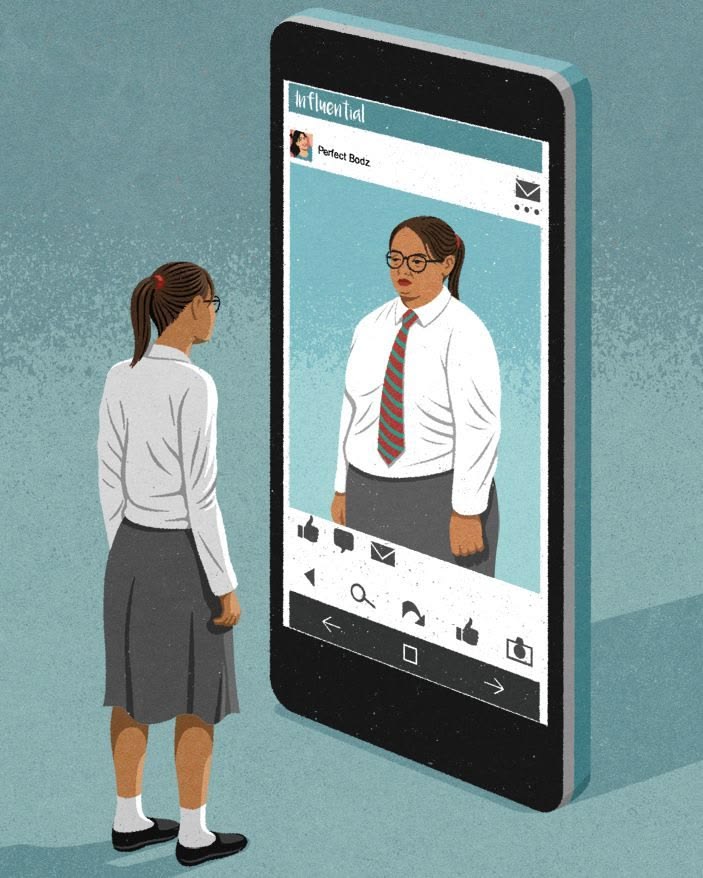
For many people, fitness content can be genuinely useful. It can provide motivation to exercise, introduce new training methods, and create a sense of community. But there is another side to the fitness social media culture that deserves more attention: the effect it can have on mental health and body image.
A study published in Eating Behaviors investigated the relationship between social media use, body image, and disordered eating behaviors. Researchers compared groups of university students from 2015 and 2022 and examined not only how much social media people used, but also what type of content they consumed.
The findings highlight an important lesson for anyone interested in health and fitness: what you look at may matter more than how long you scroll.
Fitness Motivation Can Become Appearance Pressure
Fitness is often presented on social media through highly visual content. Muscular physiques, dramatic weight-loss transformations, extremely lean bodies, carefully prepared meals, and intense workout routines can dominate fitness feeds.
Seeing these images occasionally is not necessarily harmful. The problem can arise when a person’s social media environment becomes heavily focused on weight loss and appearance.

The study found that participants who reported exposure to weight-loss content tended to have lower body appreciation and greater fear of being negatively evaluated because of their appearance. Exposure was also associated with more frequent binge-eating behavior.
This does not mean that viewing weight-loss content automatically causes these problems. The researchers specifically noted that the study’s cross-sectional design cannot establish cause and effect. It is also possible that people already struggling with body image or eating behaviors are more likely to seek out weight-loss content.
Nevertheless, the association is important.
Your Fitness Feed Can Influence How You See Your Body
One of the biggest challenges with social media is constant comparison.
A person may look at a fitness influencer and compare their own body, muscle definition, waist size, body fat percentage, diet, or exercise routine with what appears on the screen.
The comparison is rarely equal.
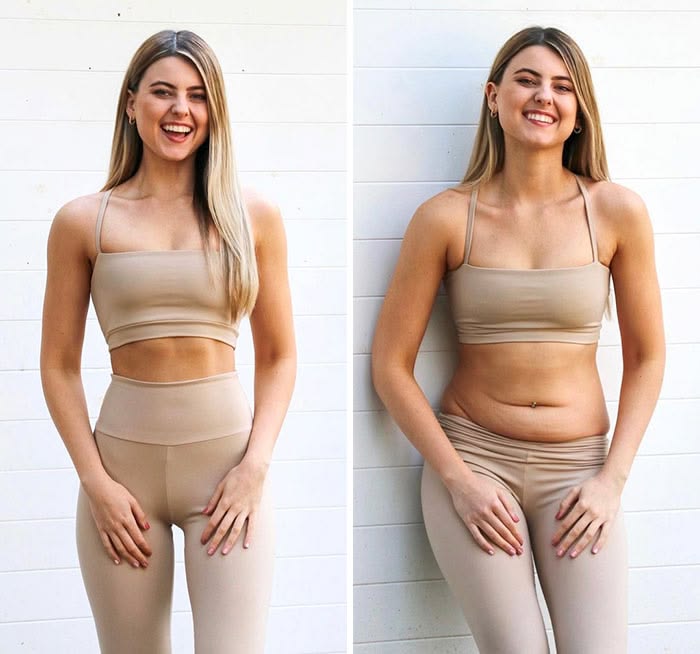
Social media images are frequently carefully selected, posed, edited, filtered, or photographed under particularly favorable lighting. Even when an image is completely authentic, it represents only one moment of someone’s appearance.
Repeated exposure can nevertheless create the impression that a particular body type is normal or expected.
For someone trying to improve their physical health, this can gradually change the purpose of exercise. Instead of thinking, “I exercise because it makes me stronger and healthier,” the focus can become, “I need to exercise because my body isn’t good enough.”
That difference matters for mental health and fitness motivation.
More Exercise Isn’t Always the Answer
Exercise has substantial physical and psychological benefits. Regular physical activity can support cardiovascular health, muscular strength, mobility, sleep, and overall wellbeing.
But exercise becomes less healthy when it is driven entirely by fear, guilt, or dissatisfaction with appearance.
Fitness should ideally be a tool for improving your quality of life rather than a punishment for eating or looking a certain way.
A healthier approach is to track multiple forms of progress:
- Getting stronger
- Improving cardiovascular fitness
- Moving with less discomfort
- Sleeping better
- Having more energy
- Improving mobility
- Building consistency
- Feeling more confident
- Enjoying physical activity
Body composition can certainly be one fitness goal. It simply does not have to become the only measurement of success.
Is Body-Positive Content Enough?
Interestingly, the researchers did not find that exposure to body positivity or body neutrality content provided a clear protective effect against the outcomes they examined.
This is an important nuance.
The solution may not simply be replacing one type of appearance-focused content with another. Even messages designed to promote body acceptance can remain heavily focused on appearance.
A healthier social media environment may therefore involve reducing the importance of appearance altogether.
Instead of following accounts that constantly encourage you to change your body, consider following content that teaches you how your body works, how to train safely, how to eat adequately, and how to develop sustainable fitness habits.
Build a Healthier Fitness Social Media Feed

You have more control over your social media environment than you may realize.
If particular accounts consistently leave you feeling inadequate, anxious, guilty about eating, or dissatisfied with your body, consider unfollowing or muting them.
Replace some of that content with educational material.
Follow qualified fitness professionals who explain exercise technique rather than simply displaying physiques. Look for nutrition information that emphasizes balanced eating rather than extreme restriction. Include content about recovery, sleep, mobility, strength, cardiovascular health, and mental wellbeing.
Most importantly, pay attention to how you feel after using social media.
Ask yourself:
Do I feel motivated to take care of myself, or do I feel like I am not good enough?
That question can tell you more about whether your fitness feed is helping you than the number of minutes you spend scrolling.
Fitness Should Improve Your Life – Not Control It
The study provides an important reminder that social media and health are complicated. The amount of time spent online is not necessarily the only issue. The content people consume can be particularly relevant to body image and eating behaviors.
For anyone pursuing weight loss, muscle growth, bodybuilding, running, or general fitness, maintaining psychological wellbeing should remain part of the goal.
A strong body and a healthy mind should not be competing objectives.
The most sustainable approach to fitness is one that allows you to become stronger, healthier, and more physically capable without constantly feeling that your appearance determines your worth.
Social media can be a valuable fitness resource. But it should be used as a tool for learning and motivation; not as a measuring stick for your body.
Your fitness journey should be about what your body can do, how you feel, and how your health improves; not constantly comparing yourself with someone else’s highlight reel.
Source Article: https://pmc.ncbi.nlm.nih.gov/articles/PMC10363994/
Related Posts